Recently, a rear end collision occurred between a Wenjie M7 and a road maintenance vehicle in Yuncheng, Shanxi, causing the vehicle to catch fire and the driver and passengers to be killed. This has attracted widespread attention from all sectors of society to the topic of automobile safety. However, when it comes to how to comprehensively evaluate whether a car is safe enough, there is inevitably a feeling of "seeing only the trees but not the forest".
Xiao An is conducting a systematic review of automotive safety here, hoping to help consumers or automotive professionals fully understand the essence and overall picture of automotive safety.
According to the usage scenarios and vehicle design, car safety can be divided into driving safety and vehicle safety. Vehicle safety can be divided into three aspects: passive safety, active safety, and electronic and electrical safety. In the event of an accident or collision, reducing the risk of injury to vehicle participants through the structural design and safety devices of the vehicle itself is called passive safety; The safety configuration that can actively avoid or reduce accidents is called active safety; The measures taken to address failures, deficiencies, misuse, or network vulnerabilities in electronic and electrical systems are called electronic and electrical safety, which can be further divided into functional safety, expected functional safety, and network safety.
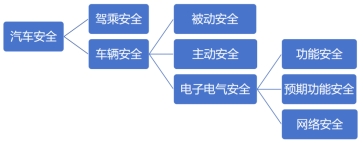
01 Driving and Riding Safety
Driving and riding safety is the most important safety guarantee in the terminal use of automobiles, involving drivers, passengers, and other road traffic participants. The following precautions are crucial for ensuring driving safety:
Driving with a license, even skilled and experienced drivers should focus on driving;
Comply with road traffic and driving regulations, laws, and public order and good customs;
Take preventive driving measures to prevent problems before they arise;
Avoid misuse (using the vehicle for unexpected behavior outside of the operating manual), such as wearing seat belts for all personnel. According to surveys, correctly wearing seat belts can reduce the mortality rate by nearly 80% in accidents.

02 Passive safety
Passive safety, also known as collision safety, is a relatively mature technology, but it is not easy to achieve full marks in collision tests due to various factors. Some factors that affect passive safety are as follows:
The body structure, through various types of energy absorbing body structure designs, can significantly reduce the harm to personnel in the event of a collision;
Vehicle body materials can improve vehicle safety and reliability through high-strength material design;
Safety airbags deploy to provide cushioning and protection for drivers and passengers at the moment of collision;
Seat belts, wearing seat belts can reduce collisions between passengers and body components under inertia;
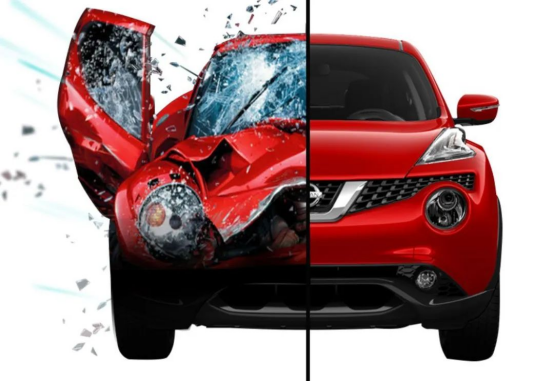
Most of the passive safety standards for automobiles in China are mandatory, such as GB 11551-2014 "Protection of occupants in frontal collisions" and GB 20071-2006 "Protection of occupants in side collisions".
03 Active Safety
Automotive active safety can be divided into multiple categories, such as collision warning, driving/parking assistance, traffic sign recognition, vehicle stability, autonomous driving, etc. Some active safety configurations are listed below:
The lane departure warning system alerts the driver that the vehicle has deviated from the designated lane to avoid accidents;
L blind spot prompt, assisting drivers in detecting vehicles or obstacles in blind spots, providing driving safety;
Reverse camera and radar improve driver visibility and detection during reversing, avoiding rear collisions;
The anti lock braking system (ABS) prevents wheel lock up and maintains vehicle handling and stability;
Electronic Braking Force Distribution (EBD) dynamically distributes braking force to all four wheels during vehicle braking to maintain vehicle stability;
Electronic Stability Program (ESP) is used to correct vehicle braking and improve stability in emergency situations;
Automatic headlight adjustment, actively adjusting the high and low beam lights and angles through the external environment, providing vehicle driving safety.
Forward collision warning FCW, which determines whether there is a collision risk ahead based on different distances and speeds, and issues warnings to the driver in advance to reduce collision risk;
Automatic Emergency Braking (AEB): Before a collision is about to occur, perform maximum emergency braking and vehicle deceleration to avoid accidents or reduce the severity of the collision;
Adaptive cruise control (ACC) adjusts the vehicle speed automatically based on the following vehicle, improving following safety;
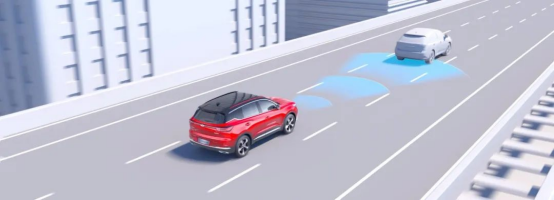
In addition, there are many active safety measures, such as considering the decomposition of autonomous driving, assisted driving L1, partial autonomous driving L2, conditional autonomous driving L3, highly autonomous driving L4, and fully autonomous driving L5 can not only liberate hands, eyes, and brains to varying degrees, but also greatly improve vehicle safety when used properly.
Automotive active safety is partially mandatory and partially recommended in China; For example, GB 17675-2021 "Basic Requirements for Automotive Steering Systems", GB 21670-2008 "Technical Requirements and Test Methods for Passenger Car Braking Systems", GB/T 39901-2021 "Performance Requirements and Test Methods for Passenger Car Automatic Emergency Braking Systems".
04 Electronic and Electrical Safety
Electronic and electrical safety is a new topic that has emerged with the continuous development of intelligent, networked, electrified, and shared vehicles in recent years. In China, functional safety, expected functional safety, and network safety have become necessary conditions for the admission and on road trial operation of intelligent connected vehicles with conditional autonomous driving L3 and above. In addition, electronic and electrical safety also includes aspects such as data security and software upgrades, which Xiao An will not introduce one by one here.
Furthermore, it should be noted that electronic and electrical safety is not only the fundamental guarantee for the normal operation of basic functions of automobiles, but also the primary prerequisite for some passive and active safety to play their roles.
04-1 Functional Safety
FUSA focuses on the safety issues of vehicle electronic and electrical systems caused by internal systemic failures and random hardware failures.
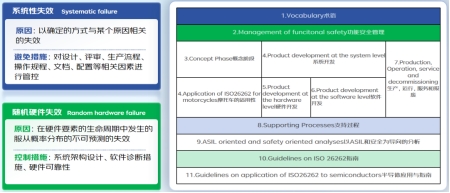
For automotive research and development enterprises, on the one hand, they avoid systematic failures through functional safety management, support activities, concept development, system development, software development, hardware development, verification and safety confirmation, and production and operation service scrapping processes; On the other hand, random hardware failures can be avoided through system architecture design, software diagnostic measures, and hardware reliability design.
The functional safety standards include the international standard ISO26262-2018 "Road Vehicles Functional Safety", which corresponds to the domestic standard GB/T 34590-2022 "Road Vehicle Functional Safety".
04-2 Expected functional safety
Regarding the electronic and electrical systems of mass-produced road vehicles equipped with assisted driving L1 to fully autonomous driving L5, in addition to focusing on functional safety and internal electronic and electrical failures, the expected functional safety SOTIF focuses on vehicle safety issues caused by functional deficiencies, environmental impacts, and personnel misuse;
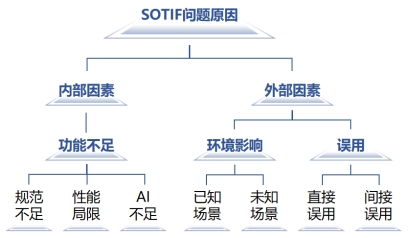
Automobile R&D enterprises should reduce expected safety problems to an acceptable level through safety design, verification and validation, that is, compared with skilled and experienced drivers, the application of auto drive system will not significantly increase casualties.
The expected functional safety includes the international standard ISO 21448-2021 'Road Vehicles Safety of the intended functionality', which corresponds to the domestic standard GB/G 43260-2023 'Expected Functional Safety of Road Vehicles'.
04-3 Network Security
The electronic and electrical systems of mass-produced vehicles on the road are susceptible to external network attacks when they have interfaces for external interaction (such as WIFI, Bluetooth, USB, 5G, CAN communication, remote OTA upgrades, diagnostic interface OBD, etc.), which can lead to issues such as driving safety or privacy leakage.
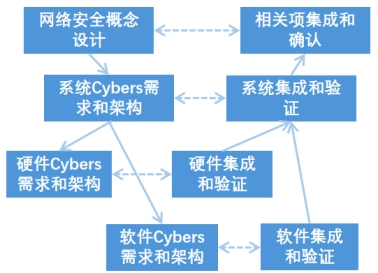
Research and development enterprises need to establish a network security development system, and conduct network security design analysis, verification, and confirmation for products.
There is an international standard ISO 21434 "Road Vehicles Cybersecurity Engineering" for network security, but the corresponding domestic standard has not yet been released.
In summary, only by ensuring driving and riding safety, passive safety, active safety, functional safety, expected performance safety, and network safety, can we truly declare that cars have high safety on the road. However, it should be noted that the safety design of automotive vehicles is not an isolated topic, and needs to be systematically considered in conjunction with various factors such as product definition, reliability engineering, quality, cost, cycle, policies, standards, and regulations.
The above is just a starting point. Do you think there are any other aspects that can further improve car safety? Please leave your valuable suggestions in the comment section.